Six and a half years for a pirate IPTV service. But if buying no longer means owning, what does "stealing" really mean?
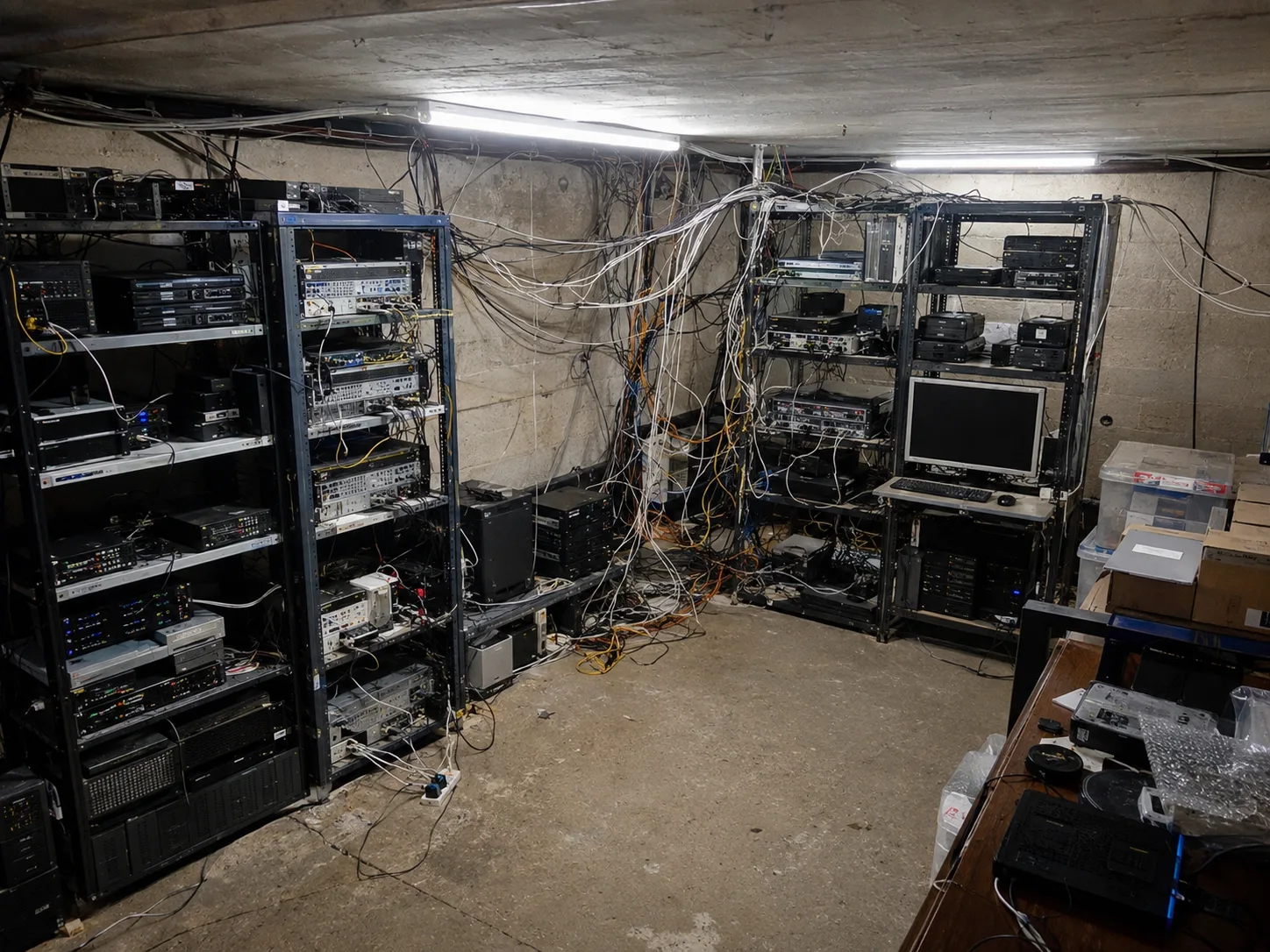
In the United Kingdom, Milan Ibrahim, 68, has been sentenced to six and a half years in prison for running an illegal IPTV service that, according to investigators, earned him £980,812 over three years, roughly $1.3 million.
We are not talking about the teenager downloading a film from the Internet, or the viewer trying to watch a match without signing up for yet another subscription. According to the City of London Police, Ibrahim had built a genuine commercial infrastructure for the illegal distribution of content: 80 servers installed in Chorley, customers in the UK and abroad, and a system that investigators described as "sophisticated and well organised".
The operation was run by the Police Intellectual Property Crime Unit, PIPCU, with the collaboration of the Federation Against Copyright Theft, FACT.
The servers were seized and shut down. Through the platform, content belonging to the BBC, ITV, Sky, the English Premier League and companies represented by the Motion Picture Association was allegedly distributed illegally.
On the legal side the case looks fairly straightforward: not simple personal use, but an organised and profitable activity built on distributing, without authorisation, content that belongs to others.
And yet this story is a chance to face a much more uncomfortable question.
If ownership is sacred, it has to be sacred in both directions
The entertainment industry rightly keeps arguing that films, television series, video games and sports broadcasts have an owner.
Whoever produces them holds rights. Whoever distributes them without authorisation violates those rights.
The principle makes sense.
The problem starts when the same industry applies a very different idea of ownership to the consumer.
For decades, buying something meant something fairly simple.
You bought a videotape and that videotape was yours.
You bought a DVD and that DVD was yours.
The film studio of course still owned the rights to the film. You could not duplicate it and sell thousands of copies. But that physical copy you had paid for belonged to you.
You could watch it today, tomorrow or twenty years later.
You could lend it.
You could give it away.
You could resell it.
The shop where you bought it could close. The producer could change its business strategy. It could even go bankrupt.
Your DVD stayed on the shelf.
Nobody could reach into the player from a distance and tell you that, from that moment on, you no longer had the right to watch it.
With digital, this relationship has been completely turned upside down.
You pay as if buying, you own as if renting
Over the past few years we have slowly grown used to owning nothing anymore.
Netflix, Disney+, Prime Video and the other streaming services are the most obvious case.
You pay every month and get access to a catalogue.
A film is here today, tomorrow it can vanish.
A series can move from one platform to another.
To keep watching content we would once have bought individually, we have to keep one, two, three or five subscriptions active.
Up to here, at least, the deal is relatively clear: you are paying for a service.
The problem gets much more serious when the same philosophy enters the world of the digital "purchase".
More and more often you press a button that says Buy, you pay a price that looks in every way like the price of a product, but what you actually get is not necessarily ownership of a copy.
You get a licence.
A permission.
An authorisation to use, subject to conditions.
And that permission can depend on an account, on a server, on the availability of the service, on the contract terms or on the future decisions of the company that sold you the product.
In other words: you pay as if you were buying, but you own as if you were renting.
And this is where the conversation about piracy starts to become far less simple than the industry would like us to believe.
You cannot sell me a rental, call it a "purchase" and then lecture me about ownership
The point is not to claim that an activity like the one Ibrahim is accused of suddenly becomes lawful.
It does not.
Building an infrastructure of dozens of servers, reselling content without authorisation and making almost a million pounds from it is a very different thing from the question of digital ownership for the individual consumer.
But it would be just as naive to ignore the transformation of the last twenty years.
The industry keeps asking consumers to respect the idea of intellectual property in absolute terms while, at the same time, it has steadily weakened the idea of ownership exactly where it should protect the consumer.
The message becomes paradoxical: what we produce is ours forever. What you buy, on the other hand, might never truly be yours.
And it is hard not to see the asymmetry.
If I buy a book, I do not buy the author's copyright.
But that copy is mine.
If I buy a Blu-ray, I do not become the owner of the film.
But the disc is mine.
Why should this distinction necessarily disappear in the digital world?
Why should the work rightly keep belonging to whoever created it, while the copy you bought stops belonging to whoever paid for it?
Technology makes it possible.
But the fact that something is technically possible does not mean it is automatically right.
Piracy as a symptom, not only as a cause
For years piracy has been told almost exclusively as a problem of users who do not want to pay.
Part of the phenomenon is certainly this.
But stopping here means ignoring everything that has changed in the meantime.
Catalogues fragmented across dozens of services. Content that disappears. Exclusives. Geographic restrictions. More and more subscriptions. Software turned into a service. Video games tied to accounts and online infrastructure. Digital products that are "bought" and yet, in practice, stay subject to the conditions set by the seller.
Piracy does not come only from the desire to get something for free.
In some cases it also comes from a far more basic desire: to keep something.
And this is probably the part of the debate the industry would do well not to ignore.
To say that this automatically makes piracy legal would be false.
To say that it has no influence on how piracy is morally perceived would be just as hard to argue.
The more the consumer gets used to the idea that what they pay for does not really belong to them, the harder it becomes to ask them to give a digital copy the same moral weight they would give to the theft of a physical object.
And now the users could be next
In the Ibrahim case, moreover, the story might not end with the conviction of the operator.
Investigators explained that analysing the seized servers could also make it possible to identify the users of the IPTV service. Some of them could face fines or other consequences linked to copyright infringement and to funding an illegal platform.
Ibrahim should also face separate proceedings under the Proceeds of Crime Act, aimed at recovering at least part of the money made through the activity.
The Premier League, which in its fight against piracy described that service as one of the largest pirate IPTV suppliers operating in the United Kingdom, called the operation significant.
There is relatively little to debate about cracking down on organisations that build million pound businesses by reselling other people's content.
But the cultural problem sitting behind piracy remains.
And it will probably keep growing as long as the industry insists on using two different definitions of the word ownership.
One for itself.
One for whoever pays.
For decades we were told that copying does not mean owning.
Today it seems we are being asked to accept that not even buying means owning.
Perhaps, before asking only how to punish whoever pirates content, it would be useful to ask why so many consumers have stopped finding credible the very model that is supposed to convince them not to.
Because one rule should be extremely simple: if you call it a purchase, then once I have paid it has to be mine.
Otherwise call it what it is.
A rental.