Why Chinese AI models aren't just "copies" of the American ones
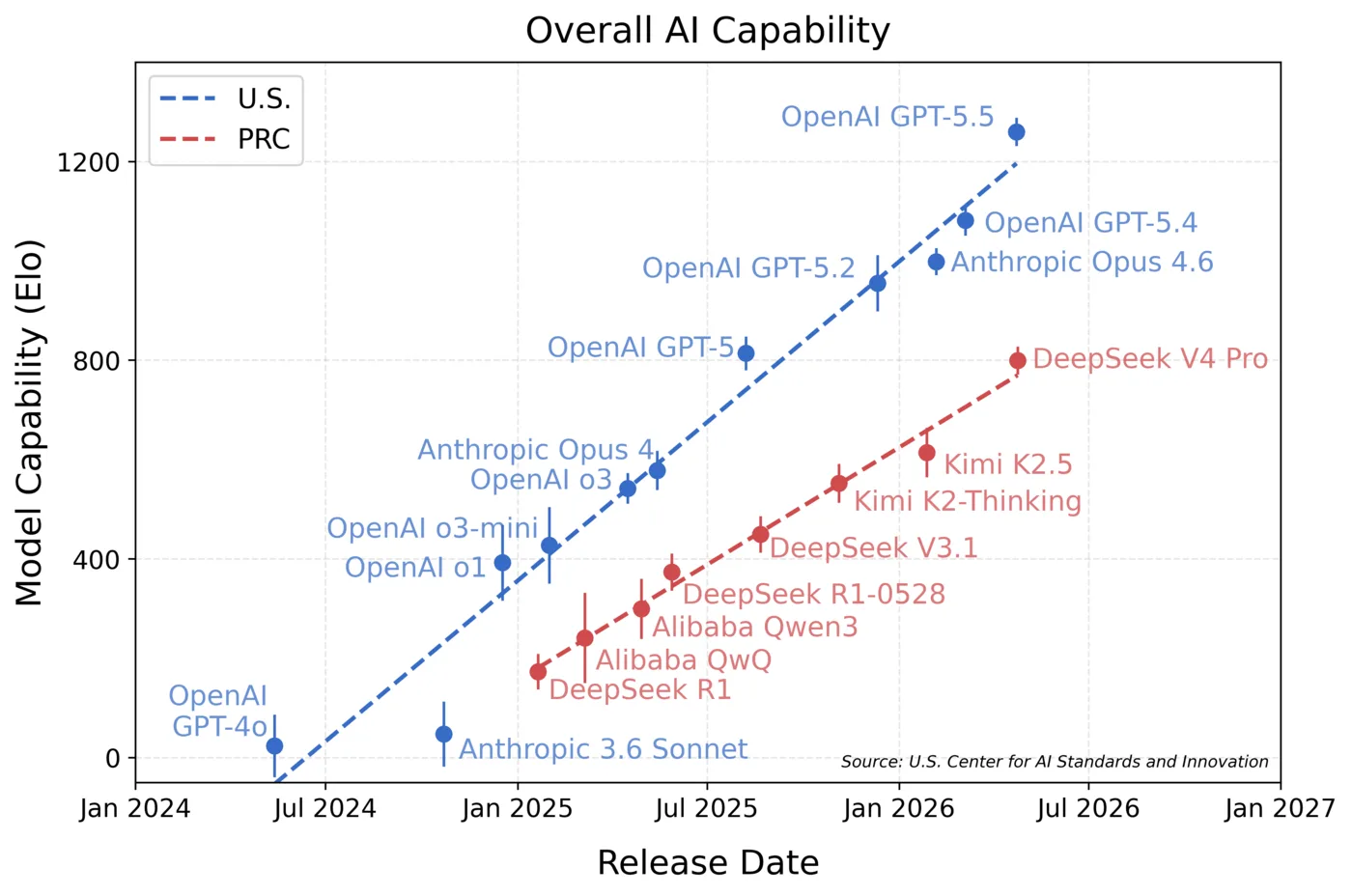
Whenever Chinese artificial intelligence comes up, you often hear the same thing: "Sure, but they just copy the American models."
It is a simple, convenient, almost reassuring explanation. But it risks making us understand very little of what is actually happening.
Copying isn't enough: what it takes to build a frontier model
Of course, in the world of AI models also learn from the outputs of other models. It happens, and it is normal. You can use responses generated by stronger systems to improve the behavior of a smaller model or to teach it certain ways of reasoning. But going from there to saying that an advanced model is born simply by "copying" is quite a stretch.
A high-end model is not built by taking a few million responses from an API. It takes data, expertise, infrastructure, research, failed attempts, optimizations and an enormous amount of technical work. If querying the American models were enough to recreate them, everyone would do it. And yet that is not the case.
The point is that China, over these years, has built a very strong ecosystem. It has many researchers, many engineers, a strong focus on scientific and technical education, and companies that have decided to publish not only models but also high-level research. DeepSeek and other Chinese labs did not appear out of nowhere: they are the result of a deliberate strategy.
Why China is betting on open AI models
For China, depending on American models would be a huge problem. It would mean paying for external services, sending sensitive data outside its own control and leaving important pieces of its industry in someone else's hands. For a country that wants to stay competitive, that is not really an option.
Opening up the models, on the other hand, lets many local companies use them right away, integrate them into their own products and close the gap with those who started earlier. It is a way to grow the whole ecosystem, not just a single company.
There is also another, more cultural aspect. Open source has played an enormous role in the growth of software in China. Many developers and researchers grew up with the idea that sharing tools and knowledge is useful, powerful and even right. That is why it is not so strange to see a similar push in the world of AI today.
Of course, it is not only idealism. There is strategy, there is geopolitics, there is competition. But reducing everything to "they are copying" is too easy.
A "good enough" model that costs less changes the market
The interesting thing is that this openness could also change the market. If there are increasingly good models available at lower cost, many companies might start wondering whether it really makes sense to pay a fortune to always use the single most powerful model out there.
For many everyday uses, writing code, analyzing documents, automating processes, handling customer support, a "good enough" model can be plenty. And if it costs much less, it becomes a natural choice.
This puts pressure above all on American companies, which have invested enormous sums expecting equally enormous returns. But if the models become more and more similar to each other and more and more accessible, those returns may not arrive in the way they were expected to.
AI is now strategic infrastructure
In the end, the question is not whether China copies or not. The question is bigger: artificial intelligence is becoming strategic infrastructure, just as software, the cloud and semiconductors were.
Whoever controls this infrastructure will have an enormous advantage. Whoever is left out risks depending on others.
And that is why China is pushing so hard on open models. Not only to compete with the United States, but to avoid falling behind in a technology that, in the coming years, will be increasingly present in work, research, industry and national security.
Dismissing everything with "they copy" makes us miss the central point: the real game is figuring out who will manage to make AI more useful, cheaper and more widespread. And on that ground China is playing very seriously.