ASML cannot keep up with AI: capacity for 2027 and 2028 already falls short
When people talk about the artificial intelligence boom they think of GPUs, data centers, models. But before all of that there is a machine, built by practically a single company in the world, without which the most advanced chips simply do not exist. And that company has just said that, for 2027 and 2028, it will not be able to build enough of them.
What Fouquet said
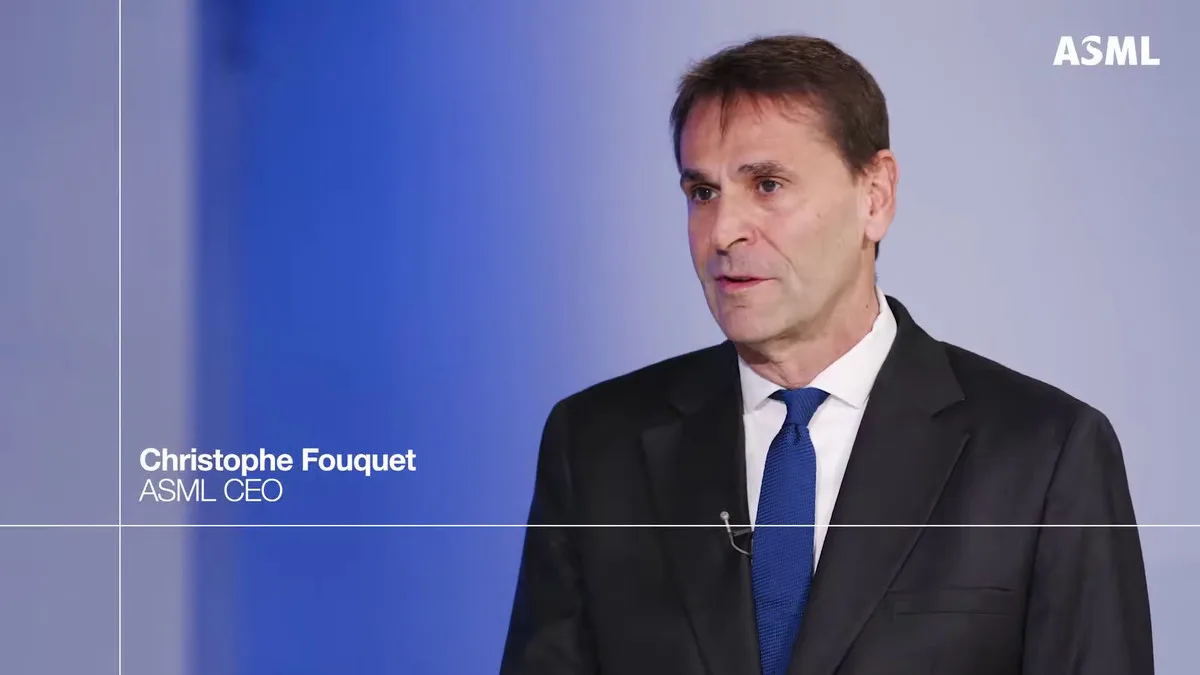
On 14 October 2026, presenting third quarter results, ASML CEO Christophe Fouquet wrote that customers keep raising their equipment demand forecasts, in both the short and the medium term. The consequence is stark: ASML now expects that its supply, as currently planned, will not fully meet demand in either 2027 or 2028.
And this while the company is already growing. In July ASML announced a 30% increase in production capacity for 2027; it is now looking at ways to go beyond that 30% for 2028 as well, without giving a new figure.
The most telling detail is another one: some customers have already expressed interest in placing orders for 2029 and even 2030. Fouquet did not say who they are, nor what volumes are involved. But the very fact that someone wants to book today machines to be delivered four years from now says a lot about how scarce this resource has become.
Why ASML matters so much
Lithography machines are the ones that “print” circuits onto silicon wafers: they project microscopic patterns onto a light-sensitive layer, layer after layer, until billions of transistors are formed. Without lithography there is no chip, and without advanced lithography there is no advanced chip.
In this market ASML holds a position with almost no parallel in the industry. The most cautious estimates credit it with more than 80% of the lithography equipment market, and around 90% in some key segments such as immersion DUV. Japan’s Nikon and Canon are the other main suppliers. But in EUV lithography, the extreme ultraviolet technology required for the most advanced process nodes, ASML is simply the only supplier in the world.
This means that TSMC, Samsung and Intel, the fabs that produce the chips of Nvidia, AMD, Apple and every AI accelerator, all depend on the same Dutch company for the same critical piece of equipment.
A machine you cannot improvise
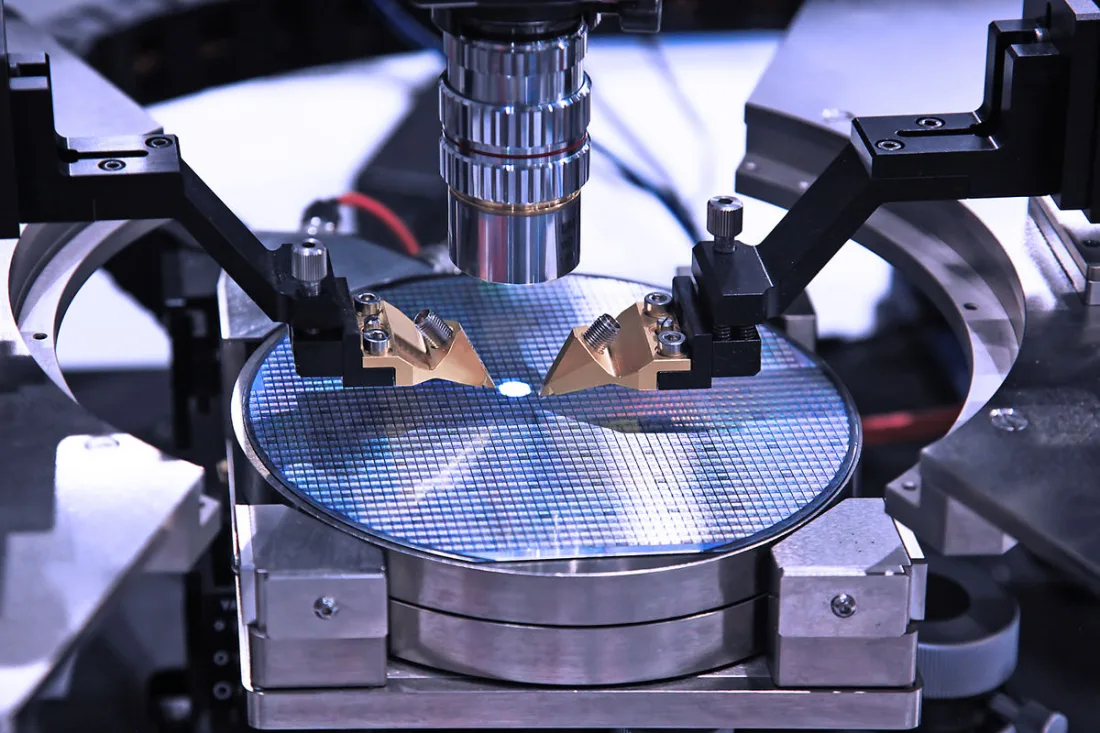
An EUV machine is not a product you can multiply by opening a new building. It generates light by hitting tiny droplets of molten tin with an extremely powerful laser, guides it through mirrors of almost absolute precision and has to operate in a vacuum. The supply chain is long, specialized and in large part unique.
The numbers tell the story. In 2025 ASML shipped 44 low-NA EUV systems. For 2026 output is around 65, and the plan for 2027 aims for at least 80. That is huge growth for a product this complex, and yet, by ASML’s own account, it is not enough.
There is another lever besides the number of machines: their productivity. In February 2026 ASML presented a new light source that raises power from 600 to 1,000 watts and that, according to the company, could increase the number of chips produced per machine by up to 50% by 2030. It is a way to squeeze more capacity out of the installed base, but that too takes time.
The quarter in numbers
The accounts confirm the picture. In the third quarter of 2026 ASML posted record net sales of €11.66 billion and net income of €4.96 billion, which also includes a gain of about half a billion from revaluing its stake in Mistral AI. Gross margin rose to 57.5%.
For the fourth quarter the company expects sales between €14.2 and €15.2 billion, and for the whole of 2026 between €44 and €45 billion, about 36% more than the previous year. The earnings call also revealed that price increases will take effect from 2027 and will be fully visible from 2028. When a sole supplier sells everything it can make, pricing power is entirely on its side.
China tries to break the dependency
Then there is the geopolitical side. Exports of EUV machines to China are blocked, and Beijing is trying to build an alternative. In December 2025 Reuters revealed that a prototype EUV machine had been built in a Shenzhen lab, partly thanks to former ASML engineers: it generates EUV light but has not yet produced working chips, and the goal of getting there by 2028 is considered optimistic. In July 2026 a Chinese state-owned company also started small-scale production of immersion DUV machines, the previous generation, for Chinese chipmakers.
None of these efforts dents ASML’s position today. But they describe a world in which lithography has become a strategic matter, not just an industrial one.
What it means for those who use technology
For anyone working in IT this news is closer than it seems.
If the capacity to make advanced chips is already booked for the next few years, the ones competing for it will mostly be the giants that can plan and pay years in advance: hyperscalers, big AI labs, GPU makers. Everyone else will come later, at higher prices and with longer lead times. It is the same pattern we already see with AI GPUs: those with capital secure the capacity, those without it join the queue.
The bottleneck of artificial intelligence, in short, is not only in data centers or in electricity. It is much further upstream, in a handful of machines built in the Netherlands at a rate of a few dozen a year. And as long as that bottleneck lasts, the cost of compute, what we pay for the cloud, for model APIs and for the hardware we keep in house, will keep depending on how many of those machines manage to leave the factory.
Sources
- ASML: Q3 2026 results (press release filed with the SEC)
- ASML Investor Relations: Q3 2026
- Reuters: ASML's strong orders ease fears AI spending boom is running out of steam
- IBTimes: ASML says AI chip demand is stretching into 2030
- ASML Q3 2026 earnings call transcript
- Bits&Chips: Nikon aims to challenge ASML's dominance in ArF immersion
- NL Times: ASML's new EUV light source and up to 50% more chips by 2030
- TrendForce: China reportedly builds an EUV prototype
- Tom's Hardware: China begins production of domestic immersion DUV machines